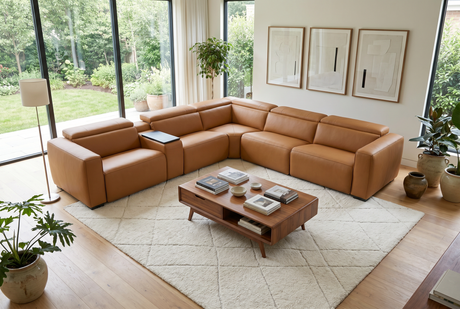
Buying furniture online is easy. Getting the right size is the hard part—and most “doesn’t fit” problems aren’t about style, they’re about missing one measurement. A few minutes with a tape measure can save you from returns, delivery failures, and a room that feels tight the moment the boxes arrive. That’s why the smartest way to shop is to treat your space like a simple plan: measure each wall from corner to corner, note the ceiling height, and map where doors and windows actually sit.
But measuring a room for furniture isn’t only about length and width. Real rooms have door swings, trim, vents, outlets, radiators, and lighting placements that can instantly change what “fits” and what doesn’t. Just as importantly, your furniture has to reach the room, so entryways, hallways, stairs, elevators, and tight turns need measurements too. Below is a practical, start-to-finish guide to measure your room, your furniture, and the full delivery path—plus a few designer rules you can use to sanity-check proportions before you order.
Why is measuring your room for furniture so important?
Most “doesn’t fit” problems aren’t about the room—they’re about missing one detail: a doorway that’s too narrow, a hallway turn that’s too tight, a sofa depth that eats your walking path, or a rug that makes the space feel chopped up.
Measuring first helps you buy with confidence, especially when you’re furnishing from photos and dimensions instead of seeing items in person.
What tools do I need to measure a room for furniture?
You can do this with basics:
- Tape measure (25 ft is ideal)
- Painter’s tape (to outline furniture footprints on the floor)
- Notepad/Notes app + phone camera (photo each wall and jot numbers)
- Optional: a laser measure and/or a phone measuring app (for quick double-checks)
How do I measure my room for furniture step by step?
Here is the step-by-step measurement guide;
Step 1: Sketch the room (quickly)
Draw a simple shape (rectangle, L-shape, etc.). Label walls A/B/C/D. You’re creating a reference map.
Step 2: Measure the walls
Measure each wall at baseboard height and write down:
- Wall A length
- Wall B length
- Wall C length
- Wall D length
If a wall has a bump-out or nook, measure those segments separately.
Step 3: Measure ceiling height
This matters for tall pieces (bookcases, armoires), wall art placement, and sometimes delivery.
Step 4: Measure and mark fixed features
On your sketch, add:
- Doors: width, height, and swing direction (very important)
- Windows: width/height + distance from corners + height from floor
- Vents/radiators/fireplaces/built-ins: their footprint and “no-block” zones
- Outlets/TV connections: helps avoid blocking access
Step 5: Define your “usable zones”
Instead of thinking “my room is 12×14,” think:
- Where can furniture actually go without blocking door swings, vents, and walkways?
Step 6: Tape out the furniture footprint
Use painter’s tape to mark the width × depth on the floor. Then walk around it like it’s real. This instantly reveals if the room will feel tight.
How do I measure furniture dimensions correctly?
Most product pages list W × D × H:
- Width (W): left-to-right across the front (sofa arm to arm)
- Depth (D): front edge to back edge
- Height (H): floor to the top
What furniture dimensions do people forget to measure?
- Seat depth vs. overall depth (sofas): overall depth affects walkways; seat depth affects comfort.
- Recliner/sleeper extension size: measure “closed” and “fully extended.”
- Leg height and visual bulk: Two items can be the same size but feel totally different depending on the legs and shape.
Tip: If you’re replacing an existing piece, measure your current one first. It’s the fastest way to calibrate “what feels right” in your space.
How do I measure the delivery path so the furniture actually fits?
Even if the piece fits the room, it still has to travel from the curb to the final spot.
Measure:
- Entry door clear opening (inside trim to inside trim)
- Hallways width
- Staircase width + ceiling height above stairs
- Elevator door width + interior depth (if applicable)
- Final room doorway clear opening
What’s the safest rule of thumb for delivery clearance?
Aim for at least 2–3 inches of clearance vs. the tightest opening, and remember packaging adds bulk. When in doubt, choose modular options or pieces that can be angled/pivoted.
How can I measure room size with my phone?
Phone measuring is great for speed, but treat it as a double-check, not your only method.
Quick phone measuring tips
- Use bright lighting and move slowly
- Measure the same wall twice and compare
- Confirm key “deal-breaker” numbers (doorways, tight turns) with a tape measure
What should I measure with my phone vs. a tape?
Use your phone for quick wall lengths and rough layouts. Use a tape for:
- door openings
- hallway pinch points
- stairs
- exact furniture footprint planning
What clearances should I plan for comfort and flow?
Clearance is what makes a room feel “easy” to live in.
Common planning targets:
- Main walkways: keep them open and obvious (especially between doorways)
- Around sofas and coffee tables: you want reachability and movement space
- Dining chairs: plan enough room to pull chairs out without hitting a wall or cabinet
Instead of memorizing numbers, do this: tape the footprint and physically walk it. If it feels awkward now, it’ll feel worse with real furniture.
What is the 2/3 rule for couches?
The 2/3 rule is a simple proportion guideline: a sofa often looks best when it’s about two-thirds the length of the wall it sits on (or the visual span it’s anchoring).
Use it to avoid:
- a sofa that looks too small and “floating”
- a sofa that overwhelms the wall and crushes end tables/lamps
This isn’t a law—sectionals, windows, and doors can change the best choice—but it’s a helpful starting point.
What is the 3-5-7 rule in interior design?
The 3-5-7 rule is mostly used for styling: group decor in odd numbers (3, 5, or 7) because it tends to look more natural and balanced.
Where it helps:
- coffee tables (3 objects with different heights)
- shelves (5 items in a mix of vertical/horizontal)
- consoles (7 smaller pieces or a layered arrangement)
What is the 80/20 rule in interior design?
The 80/20 rule is often used for color and visual balance:
- 80%: your main foundation (walls, large furniture, big rugs)
- 20%: accents (pillows, art, decor, occasional chairs)
It keeps rooms from feeling chaotic while still giving you contrast and personality.
What are the three F’s of interior design?
One common way designers simplify priorities is the three F’s:
- Floor plan: layout and flow (this is where measuring matters most)
- Finishes: surfaces/materials (floors, walls, textiles)
- Fixtures: lighting/hardware and functional details
If your floor plan is off, great finishes won’t save the room—so measure and plan first.
How do I create a simple floor plan and layout before buying?
You don’t need fancy software. Try this:
- Sketch your room to scale (even roughly)
- Mark doors/windows/vents
- Choose your “anchor piece” (usually sofa or bed)
- Tape out the footprint
- Place secondary pieces only if pathways still feel good
A practical approach is to plan in layers: big pieces first, then rugs, then tables, then styling.
When should I use a trade program or work with an interior designer?
If you’re furnishing multiple rooms, moving into a new home, or coordinating sizes/styles across spaces, it’s worth getting professional guidance—especially to confirm scale, layout, and cohesion.
You can also explore our designer-focused service here: Exclusive Trade Programs for Interior Designers.
Suggested internal-link anchor text options:
- “Exclusive Trade Programs for Interior Designers”
- “interior designer trade program”
- “trade pricing and design support”
FAQ: What are the most common questions about measuring a room for furniture?
Should I measure in inches or feet?
Use whichever you’re comfortable with, but keep it consistent. For U.S. shoppers, feet and inches are easiest (and match most product specs).
What if my room isn’t a perfect rectangle?
Break it into smaller rectangles/sections and measure each. Mark bump-outs, nooks, and angled walls on your sketch.
Is it enough to measure only the wall my sofa goes on?
No—depth and walking paths matter. A sofa can “fit” the wall but block the flow through the room.
Do I need to measure baseboards and moldings?
If you’re placing furniture flush to a wall (bookcases, cabinets), yes. Moldings can steal precious inches.
What’s the biggest delivery mistake?
Not measuring the tightest point: the narrowest doorway, the sharpest hallway turn, or the stair landing.
Are phone measurements accurate enough?
They’re helpful, but tape-measure anything that could cause a failed delivery (doorway widths, tight turns).
How do I know if a coffee table is too big?
Tape the footprint and walk around it. If it forces you to squeeze by, it’s too large for your flow.
What if I’m between two sofa sizes?
Prioritize walking paths and door swings first. When in doubt, the slightly smaller size usually lives better.