-
Stearns & Foster® Paolo Deep Blue Queen Sleeper Sofa w/ Memory Foam Mattress
Prime Day SaleSale price $2,249.00 Regular price $4,399.00 49% OffUnit priceUnavailable -
Chime White 12 Inch Memory Foam Queen Mattress in a Box
Prime Day SaleSale price $399.00 Regular price $849.00 53% OffUnit priceUnavailable -
Stearns & Foster Atillio Grey Queen Sleeper Sofa w/Memory Foam Mattress
Prime Day SaleSale price $2,519.00 Regular price $4,839.00 48% OffUnit priceUnavailable -
Nectar Classic Memory Foam White Firm Queen Mattress
Prime Day SaleSale price $689.00 Regular price $1,429.00 52% OffUnit priceUnavailable -
Stearns & Foster® Atillio Espresso Queen Sleeper Sofa w/ 6” Memory Foam Mattress
Prime Day SaleSale price $2,519.00 Regular price $4,839.00 48% OffUnit priceUnavailable -
Nectar Ultra Memory Foam 5.1 White Queen Mattress
Prime Day SaleSale price $1,239.00 Regular price $2,849.00 57% OffUnit priceUnavailable -
Nectar Luxe Memory Foam White Medium Queen Mattress
Prime Day SaleSale price $1,249.00 Regular price $2,349.00 47% OffUnit priceUnavailable -
Mira Dark Gray 14" Queen Gel-Infused Memory Foam Hybrid Mattress
Prime Day SaleSale price $539.00 Regular price $1,449.00 63% OffUnit priceUnavailable -
Chime 8 Inch Memory Foam Queen Mattress in a Box
Prime Day SaleSale price $399.00 Regular price $849.00 53% OffUnit priceUnavailable -
Findlay White 12" Queen Green Tea Gel-Infused Memory Foam Hybrid Mattress
Prime Day SaleSale price $479.00 Regular price $1,299.00 63% OffUnit priceUnavailable -
Altair White 8" Queen Gel-Infused Memory Foam Mattress
Prime Day SaleSale price $349.00 Regular price $929.00 62% OffUnit priceUnavailable -
Responda Flex Queen 5107 Memory Foam 10" Mattress
Prime Day SaleSale price $529.00 Regular price $1,329.00 60% OffUnit priceUnavailable -
Peak 2.0 10 Memory Foam White Queen Mattress
Prime Day SaleSale price $419.00 Regular price $899.00 53% OffUnit priceUnavailable -
Millennium Gel Memory Foam Hybrid Queen 15" Mattress / plush
Prime Day SaleSale price $1,489.00 Regular price $3,299.00 55% OffUnit priceUnavailable -
Aquila White Queen Size Shredded Memory Foam Pillow (Set of 2)
Prime Day SaleSale price $38.00 Regular price $97.50 61% OffUnit priceUnavailable -
Aveline White 14" Memory Foam Queen Mattress
Prime Day SaleSale price $504.00 Regular price $1,008.00 50% OffUnit priceUnavailable -
Aveline White 12" Memory Foam Queen Mattress
Prime Day SaleSale price $470.00 Regular price $940.00 50% OffUnit priceUnavailable -
Aquila White Queen Size Shredded Memory Foam Pillow
Prime Day SaleSale price $19.00 Regular price $48.00 60% OffUnit priceUnavailable -
Artemisia White 12" Queen Memory Foam Mattress
Prime Day SaleSale price $339.00 Regular price $849.00 60% OffUnit priceUnavailable -
Artemisia White 10" Queen Memory Foam Mattress
Prime Day SaleSale price $289.00 Regular price $729.00 60% OffUnit priceUnavailable -
Artemisia White 8" Queen Memory Foam Mattress
Prime Day SaleSale price $239.00 Regular price $599.00 60% OffUnit priceUnavailable -
Artemisia White 6" Queen Memory Foam Mattress
Prime Day SaleSale price $179.00 Regular price $449.00 60% OffUnit priceUnavailable -
Nasturtium White 8" Queen Bamboo Charcoal Infused Memory Foam Mattress
Prime Day SaleSale price $289.00 Regular price $729.00 60% OffUnit priceUnavailable -
Forsythia White 8" Queen Green Tea Gel Memory Foam Mattress
Prime Day SaleSale price $289.00 Regular price $729.00 60% OffUnit priceUnavailable -
Cosmos White Queen Memory Foam Mattress
Prime Day SaleSale price $519.00 Regular price $1,299.00 60% OffUnit priceUnavailable -
Weekender White/Blue Queen Gel Memory Foam Pillow + Reversible Cooling Cover
Prime Day SaleSale price $59.00 Regular price $149.00 60% OffUnit priceUnavailable -
Weekender White Queen Gel Memory Foam Pillow
Prime Day SaleSale price $49.00 Regular price $129.00 62% OffUnit priceUnavailable -
Gel Memory Foam White Queen 2.5" Mattress Topper
Prime Day SaleSale price $269.00 Regular price $679.00 60% OffUnit priceUnavailable


Why Is Queen the Most Popular Memory Foam Size?
The queen mattress measures 60 inches wide by 80 inches long, giving each partner approximately 30 inches of personal width. That's 7 inches more per person than a full-size memory foam mattress. It also shares the same 80-inch length as king and California king sizes, meaning taller sleepers don't need to sacrifice legroom.
Memory foam's motion isolation is a major selling point at this size. When one partner moves, the foam absorbs the energy rather than transferring it across the mattress. This is the primary reason couples choose memory foam over innerspring at the queen size.
Who Should Choose a Queen Memory Foam Mattress?
Couples: The queen is the standard couple's mattress. Memory foam's near-zero motion transfer means lighter sleepers won't feel their partner rolling over, getting up, or shifting during the night.
Solo sleepers who want space: If you like to spread out, sleep with a pet, or use extra pillows, a queen gives you 21 inches more width than a twin XL while fitting in the same length of room.
Master bedrooms: A queen fits comfortably in bedrooms as small as 10' x 12'. For rooms with additional furniture like a dresser, bench, or desk, 12' x 12' or larger is more practical.
Couples who frequently feel crowded at 60 inches of total width may want to explore our memory foam king mattresses, which add 16 inches of width.
Types of Memory Foam Available in Queen
Gel-infused memory foam is the most popular option at queen size. Gel beads embedded in the foam help dissipate body heat, which is especially important on a queen bed, where two sleepers generate more heat than one. Models from brands like Nectar, Ashley, and Sealy use varying gel densities and placements.
Traditional (viscoelastic) memory foam offers the deepest body contouring. It responds slowly to pressure, creating that signature "hugging" feeling. Best for sleepers who prioritize pressure relief and don't tend to overheat.
Plant-based memory foam uses renewable-source oils to replace a portion of petroleum-based materials. These foams tend to off-gas less and sleep slightly cooler than standard foam. A good option for buyers who want a lower environmental footprint.
How to Choose the Right Queen Memory Foam Mattress
Firmness: Side sleepers generally need a softer foam (3 to 5 on a 1-to-10 scale) for shoulder and hip relief. Back and stomach sleepers benefit from medium to medium-firm (5 to 7) for spinal alignment.
Thickness: Queen memory foam mattresses range from 8 inches to 14 inches. Thicker models generally provide more layers of graduated support and comfort. For most adults, 10 to 12 inches is the sweet spot.
Cooling: If either sleeper tends to run hot, look for gel-infused or ventilated foam layers and a breathable cover fabric. Brands like Tempur-Pedic and Sealy build multi-layer cooling systems into their premium memory foam lines.
Queen Room Layout and Frame Pairing
A queen mattress works on platform beds, adjustable bases, and slatted frames with slats spaced no more than 3 inches apart. Avoid traditional box springs, which can cause uneven wear on foam layers. Our queen bed frames include platform, upholstered, panel, and storage designs sized for the 60" x 80" footprint.
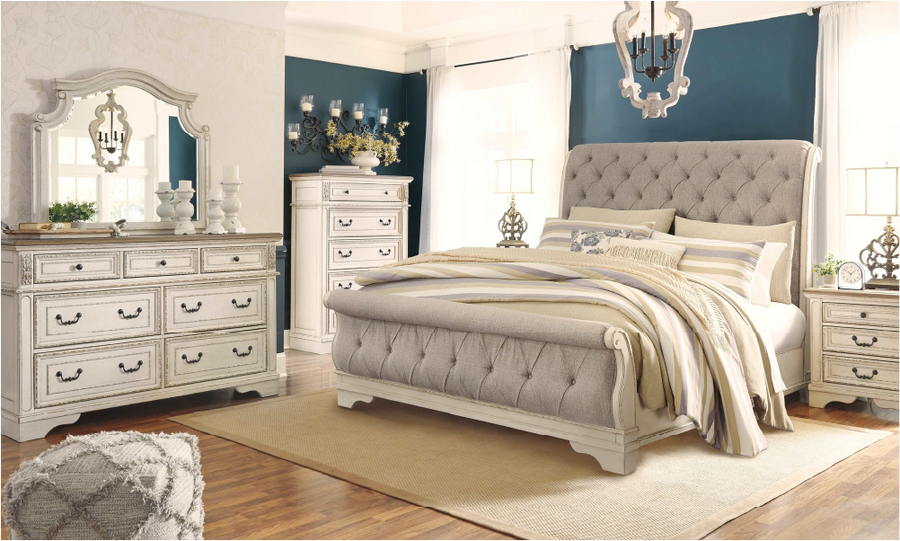
For a fully coordinated bedroom, explore our queen bedroom sets, which pair the bed frame with matching nightstands, dressers, and mirrors.